

Cataract surgery is the most commonly performed surgical procedure in the United States, with more than four million surgeries performed each year. In a metropolitan area as large as Houston, you have dozens of ophthalmologists to choose from. That abundance of options can make the decision feel overwhelming — but choosing the right surgeon matters. The surgeon you select will directly influence the precision of your procedure, the technology used, the lens options available to you, and your overall visual outcome.
Here is what to look for when evaluating cataract surgeons in the Houston area, and what separates a good experience from an exceptional one.
Board Certification
This is the baseline. Every cataract surgeon you consider should be board-certified by the American Board of Ophthalmology (ABO). Board certification means the surgeon has completed an accredited residency in ophthalmology, passed rigorous written and oral examinations, and maintains ongoing education requirements.
Board certification is not a differentiator — it is a minimum standard. But it is worth verifying, because not every physician who performs eye procedures is a board-certified ophthalmologist. You can verify a surgeon's certification through the ABO's public directory.
Surgical Volume and Focus
Cataract surgery outcomes are strongly correlated with surgical volume. Surgeons who perform cataract surgery frequently — hundreds or thousands of cases per year rather than a handful per month — tend to have lower complication rates, faster operative times, and more experience managing the unexpected situations that occasionally arise.
Beyond volume, look for a practice that is primarily surgical. Some ophthalmology practices focus primarily on medical eye care (prescribing glasses, managing eye diseases) and perform surgery only occasionally. A practice whose core work is surgical will typically have more refined techniques, more advanced equipment, and deeper expertise in lens implant selection.
The best outcomes come from surgeons who treat cataract surgery not as an occasional procedure but as the center of their daily practice.
Technology and Surgical Approach
Not all cataract surgery is performed the same way. Ask your potential surgeon about the technology they use:
- Laser-assisted cataract surgery. Femtosecond laser technology can create more precise incisions and assist with lens fragmentation, which may improve outcomes for certain patients — particularly those receiving advanced technology lens implants or those with astigmatism.
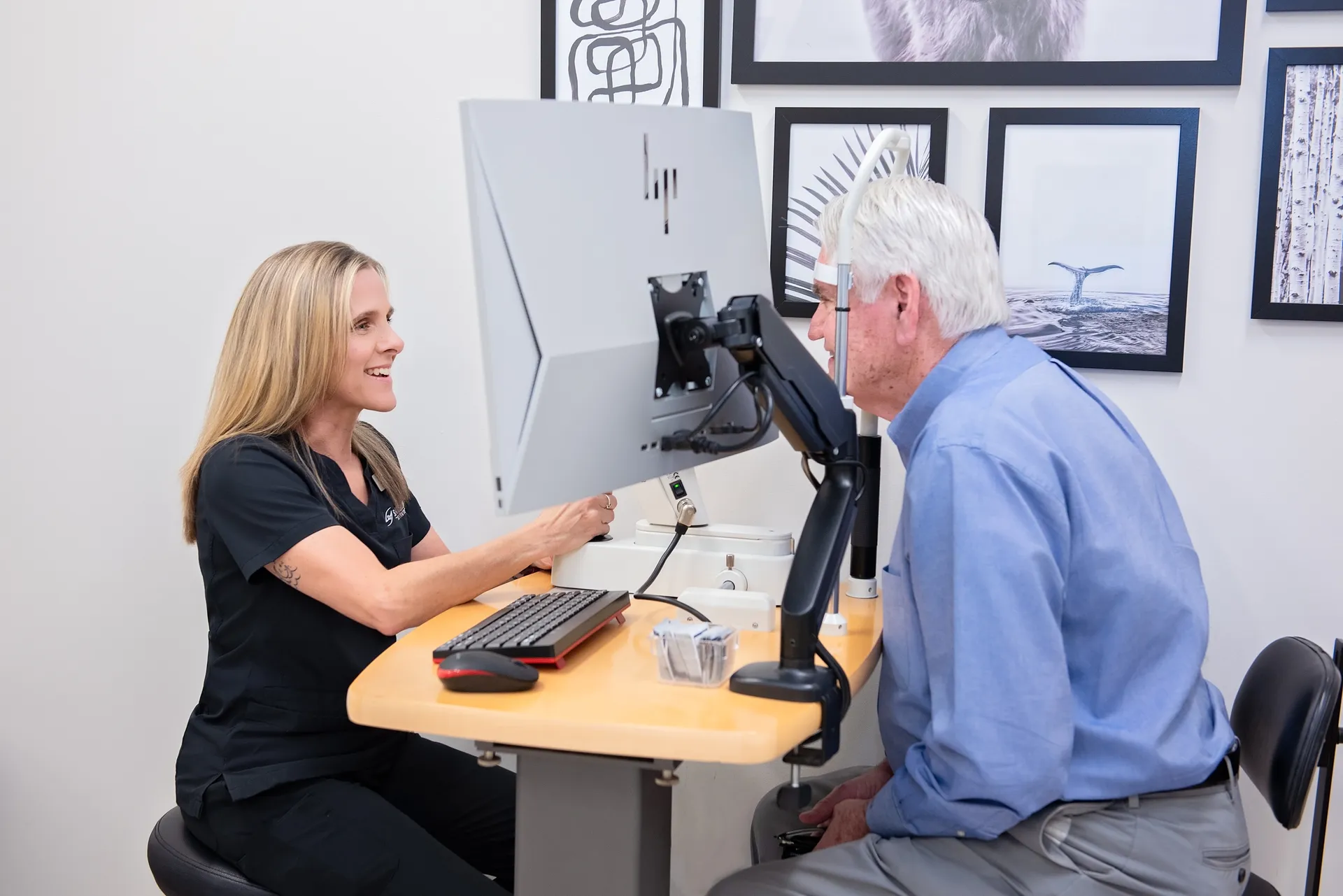
- Advanced diagnostic equipment. Pre-operative measurements are critical for selecting the correct lens power. Look for practices that use optical biometry, corneal topography, and wavefront aberrometry to maximize measurement accuracy.
- Intraoperative guidance systems. Some surgeons use real-time imaging during surgery to guide lens alignment, which is particularly important for toric (astigmatism-correcting) lens implants.
Technology alone does not guarantee a better outcome, but it gives a skilled surgeon more tools to work with — and it signals a practice that invests in precision.
Range of Lens Implant Options
One of the most important decisions in cataract surgery is the lens implant. A top-tier cataract surgeon should offer the full range of advanced technology lenses and be experienced in implanting all of them:
- Monofocal lenses for sharp distance vision (the standard option, covered by insurance).
- Toric lenses for patients with astigmatism.
- Extended Depth of Focus (EDOF) lenses like the Clareon Vivity for a continuous range of vision.
- Multifocal lenses for near, intermediate, and distance vision.
- Light Adjustable Lens (LAL) for post-surgical customization of your prescription.
Be cautious of practices that only offer one or two lens options or that steer every patient toward the same implant. The best lens for you depends on your specific anatomy, prescription, lifestyle, and visual goals. A surgeon who offers the full menu can match the right lens to the right patient.
Patient Reviews and Reputation
Online reviews are one of the most valuable resources available to you. Look at both the overall rating and the content of individual reviews. Pay attention to comments about:
- The surgeon's communication style and willingness to answer questions
- Wait times and office efficiency
- Post-operative care and follow-up
- Visual outcomes and satisfaction with lens choice
- Staff professionalism and the overall patient experience
At Soni Vision Institute, Dr. Ruhi Soni and Dr. Nikitha Reddy have a combined 4.9-star rating across more than 750 Google reviews — one of the top ratings for any ophthalmology practice in the Houston area. But more important than the number is the consistency: patients repeatedly describe thorough consultations, clear communication, and excellent surgical outcomes. You can read their reviews here.
The Consultation Experience
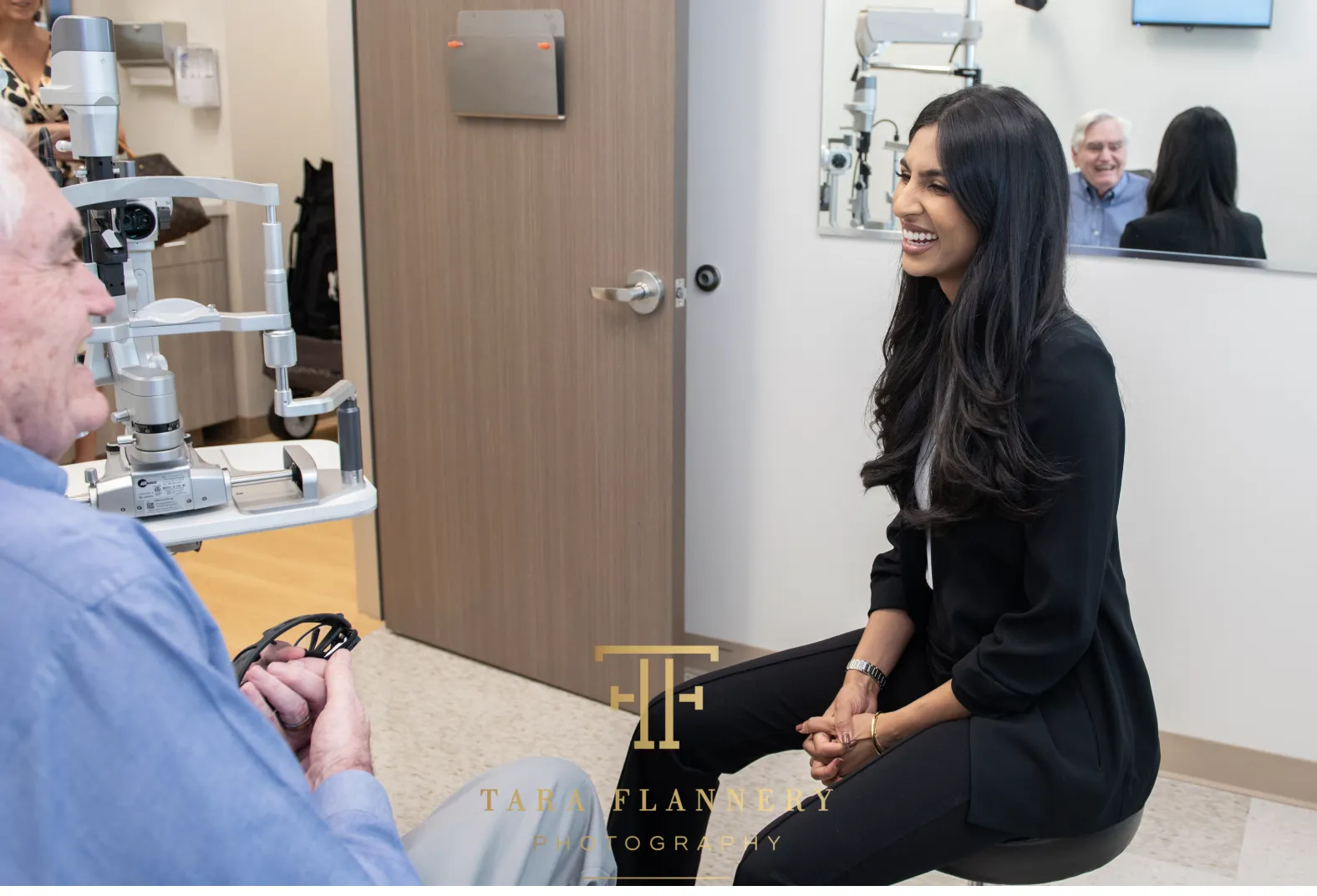
Your consultation is your opportunity to evaluate the surgeon as much as they are evaluating your eyes. A great cataract surgeon will:
- Spend adequate time explaining your diagnosis and surgical options
- Discuss all available lens implants — not just one or two
- Answer your questions without rushing you
- Be transparent about costs, especially for advanced technology lenses
- Provide realistic expectations about visual outcomes
- Make you feel heard and respected, not like a number
If you leave a consultation feeling confused, pressured, or like your questions were not fully addressed, that is a signal to keep looking.
Why Soni Vision Institute
Soni Vision Institute was built specifically to meet this standard. Both Dr. Ruhi Soni and Dr. Nikitha Reddy are board-certified ophthalmologists and highly trained cataract and refractive surgeons. The practice is primarily surgical, with a focus on cataract surgery, advanced technology lens implants, and vision correction procedures.
The practice offers the full range of lens implants — monofocal, toric, EDOF, multifocal, and the Light Adjustable Lens — as well as laser-assisted cataract surgery. With a 4.9-star Google rating, 750+ reviews, and a boutique approach that prioritizes each patient's individual goals, Soni Vision Institute represents the level of care that every cataract patient deserves.
If you are considering cataract surgery in Houston or the 290 corridor, we invite you to schedule a consultation and experience the difference firsthand.