
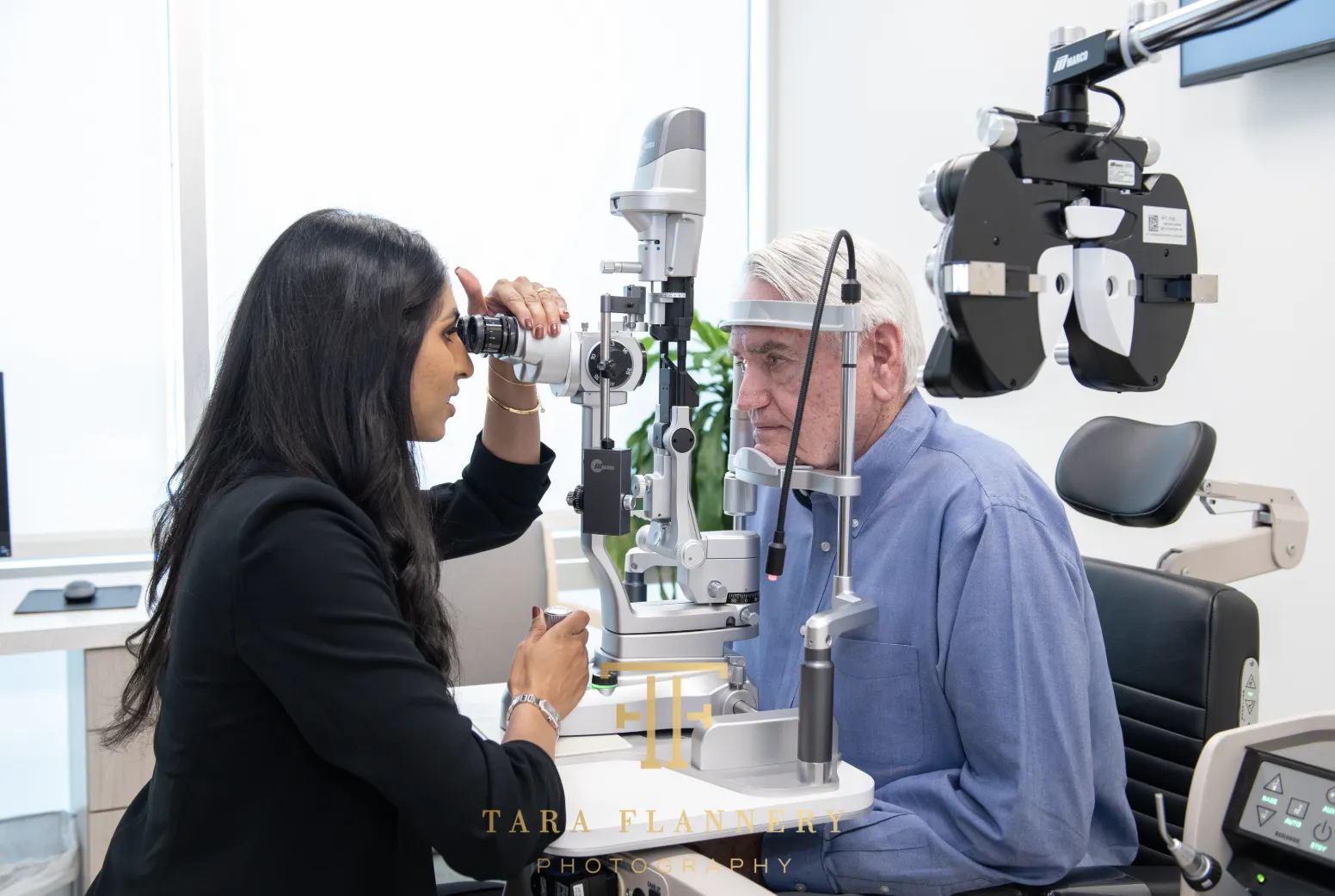

Medically reviewed by Dr. Nikitha Reddy, MD
Board-Certified Ophthalmologist • Soni Vision Institute
Cataract surgery is one of the most commonly performed procedures in the United States, and the vast majority of patients experience excellent outcomes. But there is one factor that can quietly affect both the accuracy of your surgical plan and the quality of your results: dry eye.
If you have been told you have cataracts and also experience dry, irritated, or watery eyes, it is important to understand how these two conditions interact before you head to the operating room.
Why Dry Eye Matters Before Cataract Surgery
Before cataract surgery, your surgeon takes precise measurements of your eye. These measurements determine the power of your new lens implant and play a critical role in how well you see afterward. The most important of these measurements relies on the quality of your tear film, the thin layer of moisture that coats the front of your eye.
When dry eye is present, the tear film becomes uneven and unstable. This can distort the measurements your surgeon relies on, potentially leading to a lens implant that is slightly off from your ideal prescription. In other words, untreated dry eye can compromise the very foundation of your surgical plan.
An unstable tear film can alter corneal measurements by enough to affect your final lens power. Treating dry eye before surgery is not optional — it is part of achieving the best possible visual outcome.
How Cataract Surgery Can Temporarily Worsen Dry Eye
Even patients who have never experienced dry eye symptoms may notice some dryness after cataract surgery. This is normal and usually temporary. There are several reasons it happens.
During surgery, some of the corneal nerves that regulate tear production are temporarily disrupted. The eye drops used before, during, and after surgery can also contribute to surface irritation. The microscope light used during the procedure and the small incision itself can both affect the tear film in the short term.
For most patients, these symptoms resolve within a few weeks to a few months. But for patients who already have an underlying dry eye condition, the recovery can take longer and may require more active management.
Optimizing Your Eyes Before Surgery
If your surgeon identifies dry eye during your cataract evaluation, they will likely recommend a treatment plan before scheduling your surgery. This is not a delay for the sake of delay. It is a critical step toward ensuring your measurements are accurate and your results are the best they can be.
Pre-Surgery Strategies May Include
- Preservative-free artificial tears. Used consistently for several weeks to stabilize the tear film.
- Anti-inflammatory drops. Prescription drops that reduce inflammation on the eye's surface, a common driver of chronic dry eye.
- Warm compresses and lid hygiene. Simple at-home treatments that improve the function of the oil glands along the eyelids.
- In-office treatments. Your surgeon may recommend procedures that clear blocked oil glands or promote healthier tear production.
- Nutritional supplements. Omega-3 fatty acids have been shown to support tear quality.
The goal is to create a smooth, stable tear surface so that when your measurements are taken, they reflect the true shape and power of your eye.
Managing Dry Eye After Surgery
After cataract surgery, your care team will monitor your eyes closely. In addition to the standard post-operative drop regimen, patients with dry eye may benefit from continued use of artificial tears, a longer course of anti-inflammatory drops, or other targeted therapies.
It is important to communicate openly with your surgeon about how your eyes feel during recovery. Symptoms like burning, stinging, fluctuating vision, or a foreign body sensation may all point to dry eye and can usually be managed effectively with the right approach.
Which Lens Options Work Best for Dry Eye Patients?
The lens implant you choose can also be influenced by the state of your tear film. Some advanced technology lenses, particularly multifocal designs, split light into multiple focal points. While these lenses offer excellent range of vision, patients with significant dry eye may experience more visual disturbances like halos or glare if their tear film is not well controlled.
For patients with moderate to severe dry eye, your surgeon may recommend lens options that are more forgiving of tear film irregularities, such as an extended depth of focus lens or a monofocal lens with monovision. The right choice depends on your individual eye health, your lifestyle, and how well your dry eye responds to treatment.
When to Talk to Your Surgeon About Dry Eye
The best time to address dry eye is before your cataract surgery is scheduled. If you experience any of the following symptoms, bring them up during your consultation:
- Eyes that burn, sting, or feel gritty
- Excessive tearing or watery eyes
- Vision that fluctuates throughout the day, especially after reading or screen time
- A sensation of something in your eye
- Redness that comes and goes
Even mild dry eye can affect your surgical outcome if it is not identified and treated. A thorough evaluation is the first step.
Expert Care for Both Conditions
At Soni Vision Institute, Dr. Ruhi Soni and Dr. Nikitha Reddy evaluate every cataract patient for dry eye as part of the standard pre-operative workup. If treatment is needed, it begins well before your surgery date so that your measurements are as accurate as possible and your recovery is as smooth as it can be.
If you are considering cataract surgery and have concerns about dry eye, schedule a consultation with our team. We will take the time to evaluate your whole eye, not just the cataract, and build a plan that gives you the best chance at excellent results.